Skip to content

Each One Teach One

  • Tales from the Echobox: Soft Break Patta

    Tales from the Echobox: Soft Break

    Interview by Passion Dzenga and Liesje VerhaveLaunching in 2021, Echobox has been forging a path for community radio by showcasing the diverse characters and concepts that surround their station. In this feature, we will be looking into one of the broadcasts that you can tune into, so get locked in and don’t touch that dial. Soft Break moves like a restless signal through contemporary club culture, a Rotterdam-rooted DJ whose sets feel less like genre exercises and more like living narratives. Pulling from jungle, dubstep, and grime, she slides between whispered melody and percussive pressure, from footwork’s controlled chaos to basslines that physically reshape a room. It’s a sound that’s already travelled far: from underground sanctuaries to main stages and institutions, touching spaces like Dekmantel, De School, CTM, RAUM, Garage Noord, and beyond. Always with the same forward-leaning intent.But what makes Soft Break especially vital in 2026 isn’t only where she plays. It’s what she builds. As a driving force behind AMPFEMININE, she’s helped expand the ecosystem for femme-identifying talent through bookings, mixes, mentorship, and hands-on education. At the same time, her Echobox residency has become a kind of sonic laboratory: a place to test ideas the club doesn’t always allow, to take bigger risks, and to treat electronic music as a tool for placemaking. Designing worlds through rhythm, texture, and pacing.In this conversation, we get into the freedom of radio, the discipline of the one-hour format, why skits and quiet moments still matter, and how mentoring brought her back to the core excitement of DJing. We also look forward: toward a three-month Suriname residency that will merge her sound with her visual practice and research into musical migration, diaspora, and the way traditional forms mutate in the laptop age.You have a radio show on Echobox now, and before that you played a few sets on other stations. What has the Echobox residency been like, and what does it bring you?This is really the first time I have had my own show. I have done a few guest sets with my collective, but Echobox made sense for me because there are so many tunes I don’t always dare to play in a club. I feel like I play what I want, but some tracks are just too crazy for a dancefloor context. Radio is another way to explore music and go deeper, and because there’s no direct audience in front of you, you don’t have that pressure of “does this make people move?” It’s more like being in your own living room, listening to music on good speakers.Was it intimidating at first, being on radio?Yeah, at the beginning I was nervous talking on radio because you don’t see who’s listening. Unless people say something in the chat, it feels like you’re talking to yourself, but also not. For my first show I wrote a full outline, minute-by-minute: what I’d say, what track would play when. But it felt overwhelming and took away the experiment. So after the first show, I stopped scripting.How has it evolved since then?I still plan my tracks and I plan my shows. I’ve also done specials, like a 100 BPM special, and my last one was a skit special. But I don’t plan what I’m going to say anymore. Maybe I’ll try again one day now that I’m more comfortable, but that very refined, polished approach doesn’t really reflect me.Your sets often lean bass-driven and rhythm-heavy, but you also have a strong experimental ear. What draws you to those intense, percussive styles?I love a lot of genres, but bass is home for me. I’ve always listened to bass music. And I also love experimental sounds. I’ve always listened to sounds that feel slightly off center), crazy textures, unexpected rhythms, especially combined with dreamy vocals, things you don’t always hear in a club. With radio, you can really explore that because you don’t have to make anyone dance. You can just follow the sound.Does radio give you room to take risks you wouldn’t take in a club?Definitely. I take more risks on the radio because there’s no direct audience response. Like, I might include skits in my club sets sometimes, but I couldn’t do an entire hour of skits in a club. Radio lets you build different kinds of storytelling: voices only, strange interludes, quieter moments.What inspired the skit special?Literally nostalgia. I was listening to classic skits, like the Outkast ones, and I thought, wait… where did all the skits go? There are still skits now, but they’re not as dominant as they used to be, where every album had two or three skits, an intro, an interlude, an outro. I missed that.Do you think streaming and playlist culture killed skits?Yeah, it doesn’t really accommodate them. And it’s probably also an industry thing like why put out a 30-second skit if it doesn’t “earn” the same way. But skits were also a soft break. A moment of quiet between heavier parts.Do you think club culture needs more of those “breaks” too?Yes. It doesn’t have to be 100% intensity all the time. Those little breaks make the impact stronger, it's like a pause to reset your ears.Does the one-hour format change how you build your Echobox shows compared to a club set?It depends. In a club set, I read the room. If I have two hours, my build-up might be half an hour. I’ll start at 130 depending on the slot and the context. With radio, sometimes I don’t go above 140, sometimes I start at 160. I can commit to one specific sound and stay there. Radio is complete creative freedom. Every month I can do whatever I want.Do you like one-hour sets in general?I actually do. I know a lot of DJs don’t, but I like how quickly you can change the feeling. When I first started DJing, I’d play 40+ tracks in an hour because I was so excited. I wanted to play everything. That changed over time because digging takes a lot of work if you mostly want to play with recent tracks and I learned some songs need time; they need a moment. Now I appreciate letting tracks breathe. You’re part of a collective, AMPFEMININE, but your Echobox show is solo. What’s the difference for you?The Echobox show is really for me. At first, I had an idea to invite visual artists. I’m a graphic designer and explore what they listen to while they work, and how visual work could translate into sound. But I realised I also needed moments for myself and my sound. I’ve only had a few guests when I was away, but mostly I want to continue it solo for now.What’s the concept behind the collective’s show?It’s about collaboration, how collaborations come about, the struggles and the beauty of working together. It’s not only about music industry collaborations either. Last year we did a monthly one-hour show, but it felt too short because we wanted to interview a guest and also play back-to-back. So this year it’ll be two hours, every two months, so we can actually go deeper.You also organised a panel talk around staying in music while becoming a parent. Why was that important?It’s something we’ve wanted to discuss for a long time. Nightlife and aging makes you reflect, what happens if you want to become a parent? But also, what if prioritizing a career in nightlife is the path that feels most authentic right now, even if it means not becoming a parent? How do you continue? The biggest takeaway is simple: it takes a village. You need a healthy support system to keep going with the same energy. And online, it can look effortless when people are always out, always active, but it’s not easy, and not everyone has supportive parents or family. The collective also runs DJ education. What gap were you trying to fill?We kept getting asked to do one-hour or two-hour workshops. And honestly, you’re not starting a DJ journey from one hour. So we applied for funding and built a longer course where people can actually learn and experiment. One hour is still better than nothing, but we wanted something real and extensive.What was important about how you structured it?Accessibility. A lot of DJ classes are expensive. Ours was affordable and it was a full package, an eight-week course, press photos, write a unique bio, make your own rider and record a radio set. It wasn’t just “learn to DJ so you can become famous.” It was about discovering music, discovering your sound, learning how genres can connect.What does it feel like seeing people grow through the program?It’s amazing. You see someone in week one who can’t do anything yet, and then later they’re closing a big venue. It’s beautiful to watch. One of the mentees, Meena,  just closed Export in Rotterdam.What are the long-term goals?Structural funding and a home base. A place where people can always come to practice. Because if you have to rent space to practice, it becomes less accessible again.Has teaching changed what you personally get from DJing?Honestly, it helped me regain my love for DJing. At some point, I felt like I had to choose between graphic design and music because I was working nonstop, seven days a week, morning to midnight. It wasn’t sustainable. And DJing is even less stable financially than design. So I lost that original reason I started. But mentoring brought it back, and seeing the excitement, the obsession with digging, experimenting, and discovering. That’s the core. It reminded me it should be for you.You work across audio and visual worlds. Do you see a future where those practices merge?Yes, definitely. I actually have exciting news: in September, I’m going to Suriname for a three-month residency. The project is about Surinamese music migrating to the Netherlands and how the diaspora is now playing that music loudly and proudly in the mainstream, while there was a time it wasn’t accepted. I’m interested in how those worlds collide, like mixing that traditional music with techno, or newer club forms. I don’t know the final form yet, but it might become a book or a short film.Does Suriname show up in your DJ identity already?Not directly, but I’m Surinamese, so of course - maybe in how I work with rhythm - changing tempo, switching patterns. It’s hard to explain what I’m doing sometimes. But yes, you could say it’s present in the polyrhythms and the way the bass and groove move, even if the references aren’t explicit.What does this trip represent for you personally?It’s spiritual. I don’t speak the language. I’ve only been back once. My grandparents came to the Netherlands in the 60s, and a lot of my family was born here, so there’s already a gap in connection. Music became my way of connecting without needing words. But now I also want to understand the rituals behind it, the stories, the deeper context.Traditional music forms being made on laptops now, how does that interest you?Because traditionally, some of these forms are made by groups. Live, communal, with multiple people, and now people are making it alone on a laptop with presets. I want to understand what that shift does, and how technology changes culture, sound, and authenticity.Tune in to Echobox, broadcasting from below sea level every week, Wednesday until Saturday. 
    • Get Familiar

  • Get Familiar: Stapelgang Patta

    Get Familiar: Stapelgang

    Interview by Passion Dzenga and Liesje Verhave | Photography by Sam Vanacker and Lowie van der GrintenThere is something fitting about Stapelgang taking their name from a street. What began as a group of friends from dance school gathering to listen to music, exchange references and talk about the details hidden inside the songs they loved has gradually developed into something much larger: a musical project, creative community and shared language built from years of moving, listening and working alongside one another.Formed around 2018, Stapelgang grew from friendships established through dance, but the group were never interested in remaining within a single discipline. Music, performance, production, theatre, DJing and visual culture all became part of the same creative vocabulary. Even their name has come to reflect that approach. A stapel is a pile or stack: something built by placing one thing on top of another. For Stapelgang, every experience becomes another layer. Knowledge picked up through dance feeds into music; theatre informs the live show; friendship shapes the studio; and the wider community around them continues to influence what the group can become.Now operating as the trio of Gary “Duimalot” Gravenbeek (vocalist), Jeffrey “Jackson” Loewenicht (producer) and Skeyenno “Kiddy” Talany (vocalist), Stapelgang are pushing that philosophy further with their self-titled EP. Developed through intensive writing camps, tiny rooms, ageing laptops and an instinctive creative relationship years in the making, the project captures a group learning how to turn the chemistry of friendship into something more deliberate without losing the spontaneity that made it exciting in the first place.Following the release of their EP, Stapel, we sat down with the group to talk about growing from dancers into musicians, learning to work professionally with your closest friends, making something from very little, building a live world around their music and why the people surrounding Stapelgang remain just as important as the three standing at its centre.You all knew each other through dance before Stapelgang existed. How did that friendship eventually become a musical project?Gary: Stapelgang started around 2018. We were a group of friends and most of us came from the dance academy, so there was already this whole family surrounding what we were doing. We would have nights where we came together, listened to a lot of music, shared music with each other and really talked about how it made us feel and all the different layers within it. I think that was when the depth of what we were doing together, beyond dancing, really started coming into the room. We started investigating what all of this meant to us individually and what it could mean collectively.At that point there were five of us, including Evan “N4VY” Blaaser - Lumen Atlas and Okke “Orka” Pieters. One night we were outside in Amersfoort and took a picture on this little street called Stapelgang. From there it became “gang”. But the idea of a stapel — putting things into a pile — actually ended up describing us really well. Everything we learn from other work, whether that's theatre, acting, performing or dancing, gets put back into the pile. All of that information comes back into Stapelgang.Jeffrey: We were schoolmates, classmates and dance mates, so our relationships had already developed across all these different layers. That made our connection through music stronger too. Some of us were DJing, some were interested in beats and production, and eventually all of those elements started coming together. We developed a language where somebody can say, “Can you make it more like this?” and we know what they mean because we already understand how the other person experiences music.As dancers, you're embodying the music. Now we're making the music. Those things are connected because you're already trained to recognise what you're looking for emotionally.Was there a clear moment when you decided to start making music, or did it simply become another extension of the way you already related to sound?Kiddy: I think it all comes down to loving music. Dance is one aspect of that love, but there is another realm of enjoying music where you're actually making it. For us, those things add to each other. They're different sides of the same coin.Dance was really the first layer. A lot of us were already interested in how music was made, but dance brought us close together and taught us how to enjoy and analyse music together. Eventually the question became: how do we actually make the kind of music that makes us feel this way? Then suddenly we're vocalists, we're making beats and we're all sitting together in this tiny room that's way too hot with way too many people inside it.Gary: I don't even think there was one real starting point. Some of us grew up around music through our parents, and I was already a vocalist before I seriously started dancing. We were all so obsessed with finding music and listening to SoundCloud beats that eventually somebody had to take the next step and start making it themselves.Because we came from dance, we'd also been exposed to a lot of really high-quality music, so our ears were already slightly spoiled. When you begin producing, you immediately know the thing you're making could be better. You're not necessarily ashamed of it, but you understand that you're still in a process.We'd also worked together creatively before Stapelgang properly became a musical project. We choreographed a performance for the National Theater and had to create music for it, which taught us a lot about how we function professionally. Being friends is one thing; actually being responsible for something together is completely different. By the time we started doing proper studio sessions and writing camps, it didn't feel like we were suddenly jumping into something completely new. We already knew quite a lot about how each other worked.Friendship and working relationships don't always translate easily. How have you learned to work professionally together without losing what made you friends in the first place?Jeffrey: It happened quite organically because we know each other's strengths and we're also aware of each other's weaknesses. I know what I can expect from Gary during a certain part of the day, and I know when his concentration is gone and it's time for me to go to Kiddy instead. You learn each other's rhythm in the room.We've also all worked professionally outside of Stapelgang. We've had our own experiences with companies, groups, theatre and other projects, so we understand what it means to work professionally. We didn't need to spend years discovering basic things about one another before we could actually start creating.Kiddy: The years of friendship matter because we've spent years listening to music together and discussing why a sound hits for one person but maybe doesn't hit for somebody else. After enough of those conversations, you almost start living inside each other's brains.When we're working now, sometimes we only need to look at each other. Somebody can use one metaphor and suddenly everybody understands what needs to happen. We've officially been working together on music for a few years, but in another sense we've been developing this sound and this communication for much longer than that.Gary: And the community around us is part of that too. We're the three people stepping forward now saying, “We're Stapelgang,” and that's true, but the people around us have also been involved in this research. They've listened to music with us, talked about music with us and worked on projects with us.When we did the campaign shoot, for example, there were a lot of friends working on it. Everybody already understood each other's expectations. In some ways, we've already done the work because we've spent so many years learning how the people around us operate.Your self-titled EP came out of writing camps rather than a rigid concept. What were you trying to discover when you began making it?Jeffrey: It started with a writing camp in 2025 that was connected to one of my development projects. Part of my research was about producing, and I already knew Gary and Kiddy were making music individually, so I wanted to invite them into the project.We went into it completely blank. Whatever happened, happened. We knew there were certain colours we were attracted to. We wanted things that sounded cinematic, but we also wanted things that felt raw. Once we were in the room, the direction became clearer.That's basically what the EP represents. It's all of our tastes coming together and what happened between us in that room. There wasn't a meeting where we planned exactly what the project needed to sound like. Somebody would hit the first piano chord and we'd suddenly know: okay, it has to go this way.What were those writing camps actually like? Was getting away from your normal environment important to making the project?Gary: We did two writing camps. The first was almost like being at a Center Parcs-type holiday situation, except we genuinely went there to work. I have to give Jeffrey props for that because writing camps can easily turn into partying and messing around, but we really went in. We'd sleep two or three hours and then go straight back into that little room.The first camp was really about making whatever we felt. Megan was there to take photo’s, Joshua was there to cook the food, and there were people around us who were already friends but who were also there because they're professionals at what they do. That distinction was important. You can be friends and still take each other's craft seriously.The second camp was a little harder because we deliberately tried something different and invited other people in. But both experiences taught us about the conditions we need to make the music hit as hard as possible. Even small things matter. There was catering. Things were organised. We weren't living off instant noodles and turning every night into a party. We ate well and we worked.You've spoken about making music in tiny rooms and sometimes working without ideal equipment. Has limitation become part of the Stapelgang process?Kiddy: Technology might genuinely be our biggest enemy sometimes. When it doesn't work the way you want it to, it can slow everything down. But besides that, these are the people I want to work with for the rest of my life.Jeffrey: We've learned how to work with less. Sometimes all we have is a laptop. My laptop is seven years old now, so it definitely has its moments. The sound treatment hasn't always been right either. But we learned how to ask: if we don't have professional equipment, how do we still make this sound professional? How do we get everything possible out of what we have?That taught me something important about these guys and everybody around us. We don't need to have everything. Whatever we do have, we're going to get the most out of it. Of course, sometimes you just want the great studio, the great microphone and the great laptop. But learning without those things means that when they're finally there, we know what to do with them.Kiddy: That's probably where we shine most. We've always been used to creating something out of nothing. That's part of dancing and it's part of our friendship. Those environments can be difficult, but they're also where we thrive.There is a huge amount of energy around Stapelgang. How much of that comes from the fact that you're creating alongside people you genuinely trust?Gary: The energy feels normal to us. Dance definitely has something to do with it, but I think the bigger thing is feeling safe enough to explore and have whatever outlet you need. Those things create a space where you can do whatever you want.We've worked hard, and my motivation now comes from feeling like everything is possible because I'm working with my friends. I'm really close to them. That's something I want other people listening to us to feel as well: find your people and make something together.That's also part of why we want the music to be something everyone can tap into. I want people to hear what we're saying, find their own clique and move. When I'm standing onstage and I look behind me and see Jeffrey and Kiddy, I explode. That's all I ever wanted. I think everybody deserves to find their own version of that, whatever their lane might be.“FC Stapel” feels like one of the clearest examples of that community becoming visible. How did the track and its visual world come together?Kiddy: We were asked to make an anthem for a dance festival “Freedom City” in Utrecht. Raymond “Baba” Ramdihal, who runs the event, is also a friend of ours. That's what made it special: he's doing his thing by organising an event, we're doing ours, and then those worlds can meet.It gave us the opportunity to work with people like Daring “G” Guermonprez, Arif Gusejnov - Sound Masters Academy, Roy “Royal”, Megan Jane Simons, Trak Studios, Sansho Weynschenk, Jochem van der Velden, Gogo Lupin, Lowie van der Grinten - Lowiegraphy, Macy Sarinah, Joshua Bagano - Shempreh and Elsemieke van Essen. It became another stapel, another pile of different people, but everything still came from the source of who we are.The song itself was funny because we spent two or three days making completely different tracks. We were deep in the process, but nobody was saying anything. Eventually I just told everyone, “I'm not going to lie, I'm not feeling this.” Everybody looked at me like, “Yep. Nobody is.” Then we started again. Jeffrey made the new beat in about five minutes.Gary: We asked him what he actually wanted to make and he basically said: just hip-hop. He found a sample, loaded it in and then we separated. He did his part, we did ours, and suddenly it worked.Kiddy: Then Darin G came in and put his magical fingers on it. After all those days trying to force something, FC Stapel basically just happened.Jeffrey: I think we're free spirits when we're inside the studio. Outside the studio, we're hard workers. But in that freedom, that's where the magic comes from. Some of our songs just happen. When we have too many borders and we're told exactly what something has to be, that's more challenging for us. It's something we're learning, but the songs that arrive organically are often the ones closest to my heart.You all come from theatre and dance, so a Stapelgang performance was never likely to be three people simply standing under a spotlight. What did you want people to experience at the EP release show?Jeffrey: We come from theatre, so we don't want people to simply watch us perform. We want them to experience a moment. There is nothing wrong with just having one light and going raw and rapping, but that represents maybe two percent of who we are.We wanted everything to contribute to the experience: VJing, stage design, outfits and lighting. For me, “Blauwe Vinkjes” was probably my favourite song to perform because everything came together during that track. There was so much happening visually. I'm a very visual person, so when the VJing, lighting and everything else clicked at the same time, I could feel that the whole thing was switched on.Gary: The live setup is important to us because we want it to sound genuinely good as well. We've been working with our own sound engineer and using a MIDI controller within the setup. We play with in-ears and monitors, and then we have the visual stage design around us made by Esmeralda van Kekem — the grass mat, pink objects, blocks, circles. We're still developing it, but we want the technical and visual sides to be taken seriously because the performance isn't separate from the music. It's another part of it.You've built this project through instinct, but you're now talking much more deliberately about organisation and the future. What does the next stage of Stapelgang look like?Gary: This upcoming year is going to involve a lot of focus on the organisational side. We're going to continue releasing singles and keep building the online buzz we're creating now through good music, high-quality videos, funny videos and giving people more depth into who we actually are.We're also looking at fundings so we can plan further ahead instead of constantly reacting. Jeffrey is becoming a father, which means we're thinking seriously about how we can work ahead, unload some of his workload and become more efficient as a group.Kiddy and I are also going to be working together on a theatre performance with two other organisations, which means we're going to be around each other for four months. The plan is to make 32 songs during that period.There's already another single almost ready. It was made during the first writing camp and originally could have been part of the EP, but we decided to leave it off and release it separately.The bigger goal is to create enough music and plan enough of the coming year that we have the headspace to properly develop the organisation around Stapelgang. We want to know who we want to work with, which venues we want to be in, who we need to talk to and where the important moments are going to happen. Then we can plan releases around those moments and make sure the people who need to see us actually see us. It's about building Stapelgang into something where we know exactly what we're doing.For all the talk of releases, writing camps, stage design and future plans, the most important part of Stapelgang might still be the simplest: these are friends who learned how to listen to one another.Long before the EP, they were already building its foundations in dance studios, theatre productions, late-night conversations and sessions spent pulling apart the music they loved. That history explains why so much of their process appears instinctive today. A glance can replace a paragraph. A metaphor can redirect an entire session. After days spent forcing a song that doesn't work, somebody can finally admit it and everybody else immediately understands.That trust extends beyond Gary, Jeffrey and Kiddy. Throughout the conversation, they repeatedly return to the people around them: N4VY and Orka in Stapelgang's beginnings; Megan and Joshua at the writing camps; Raymond and the community behind FC Stapel; and collaborators including Daring G, Arif, Royal, Megan Jane, Trak Studios, Sansho, Jochem, Gogo, Lowie, Macy, Shempreh and Els who helped expand the group's ideas into something larger. Stapelgang may now have three people at its front, but they make it clear that the pile was never built by three people alone.That makes the name feel increasingly appropriate. Every discipline, friendship, limitation, performance and collaboration becomes another thing added to the stack. Nothing has to exist independently when it can feed the next idea.And as Stapelgang move from making music in overcrowded rooms towards a more ambitious live show and increasingly deliberate future, they don't seem interested in abandoning the conditions that first made the project work. The equipment can improve. The stages can become bigger. The organisation can become sharper. But the principle remains the same: find the people who understand your language, make the most of what's in front of you, and keep adding to the pile.
    • Get Familiar

  • Get Familiar: Ezra Collective Patta

    Get Familiar: Ezra Collective

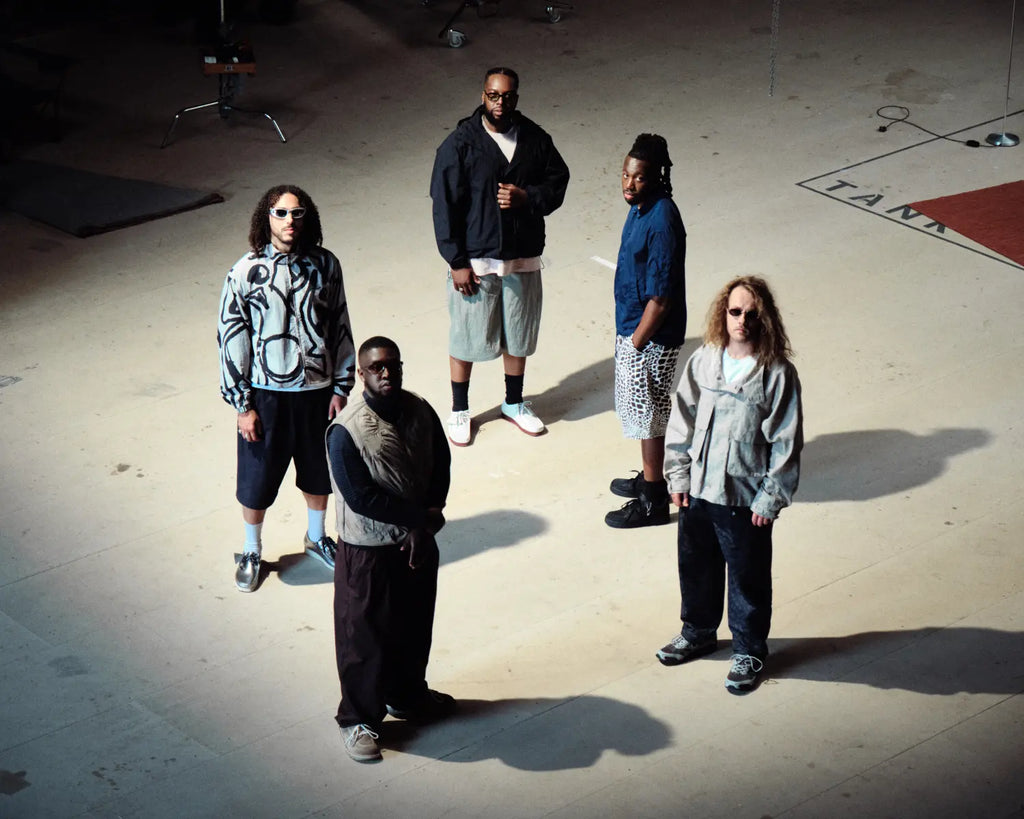
    Interview by Passion DEEZ Ezra Collective’s new album, Here Because of Hope, feels like a record made by a band looking at where they have come from without losing sight of where they could still go. For bassist TJ Koleoso, that growth is less about becoming better musicians and more about developing the patience, perspective and understanding needed to make music about something as complicated as hope.Having grown up playing alongside his brother and Ezra Collective bandmate Femi Koleoso, TJ has spent more than a decade developing the rhythmic relationship at the centre of the band. Along the way, Ezra Collective have gone from Tomorrow’s Warriors sessions to winning the Mercury Prize, being named BRIT Group of the Year and playing Wembley Arena, all while pushing jazz into spaces where it has historically struggled to receive the same mainstream recognition.With Here Because of Hope, the ambition remains, but so does the humility. Speaking with Patta, TJ discusses learning when not to play, the bass as the glue holding Ezra Collective together, what Gary Crosby taught him about confidence without arrogance, the importance of developing away from the spotlight and why the band still wants to be the most ambitious people in every room they enter.You’ve described Here Because of Hope as a record that reflects Ezra Collective growing up. What does that maturity actually sound like to you?I’m not sure I necessarily meant that we’re going from being children to adults as if we’re better at playing now, or as if to say that we were childish in anything previously. I think the theme of hope is one that requires a more mature understanding of humanity and life.The meaning behind a lot of the songs requires a slightly more mature outlook to really grasp what we’re trying to say. Musically, as we’re growing older, there’s maybe an increased patience with getting to a point of release. We’re waiting a little bit more and trusting the journey of certain songs, and more so the journey of the whole album.Femi has spoken about studying West African and specifically Gambian music while making “Only Love”, and how that informed both the drums and bassline. As the actual bassist in the band, what happens when your drummer walks in with a bassline?I don’t always write the basslines for Ezra songs. In fact, it’s probably rarer for me to write a bassline because we’re all songwriters. Everyone spends time writing their own music and brings it into Ezra.At that point, it’s more a case of me putting my bassist hat on and approaching basslines that might have been written by somebody else, then adapting them in a way that I feel is going to sound like me and therefore sound like Ezra. We’re completely used to it. I never think, “Why have you written a bassline?” I love it when people come in with different ideas.The magic comes when each of us takes responsibility for making those ideas sound like ourselves and, ultimately, making them sound like Ezra Collective.You and Femi grew up together, played in church together and have now spent more than a decade in the same band. What can you do together rhythmically now that you couldn’t ten years ago?Ten years ago, I was probably a lot worse at the bass guitar. Not even in a self-deprecating way; I just hadn’t played that much, relatively speaking. I’d played in school bands and was still trying to find my feet in the jazz world.But the thing we prided ourselves on most was always being able to lock in rhythmically, especially on Afrobeat songs. That’s been really consistent over the last decade.Now, there’s probably an increased amount of linking up that we do on certain songs, but there are also more surprises when we play together because we don’t live with each other anymore. We’re not kids anymore. Sometimes when Femi plays certain things, I’m forced to be a little bit more reactive than I might have been in the past, which is great. I love playing with him. I wouldn’t have it any other way.There’s a lot of virtuosity in Ezra Collective, but the music rarely feels like five musicians trying to prove how good they are. As a bassist, how do you know when not to play?I’ve had the benefit of never necessarily seeing myself as a virtuoso in any way, shape or form. I never studied jazz and always felt like I was maybe the least experienced person in the rooms I was in growing up. I just felt an immense sense of privilege to be playing with such talented musicians.Especially having a brother like Femi, who has been playing drums since he was about three, while I didn’t start until I was 11, I was always in a position of humility. It was always: let me listen and play what is necessary.I had a teacher at school who described the bass as the glue in the music because it has the ability to speak rhythm, melody and harmony. Our job is to translate for the rest of the players in the band and make sure everything sticks together and everyone understands.If you take that job as a translator seriously, you don’t necessarily add too much of yourself. If somebody was translating my words and started adding their own opinions and bits and pieces, they wouldn’t be a very good translator.That’s how I’ve always tried to approach bass. First and foremost: what does the song need to tie these different elements together? Sometimes that means doing something difficult or virtuosic, but more often than not it’s sitting down on the groove and providing a beautiful foundation for the more colourful melodic instruments to do their thing over the top.The album asks why so much Black music created through difficult circumstances can contain so much joy. What’s your own answer to that?The only way that’s possible is because of hope.Our predecessors, our ancestors, those who came before us, our influences and inspirations, saw music as a tool for inspiring and invoking a fight in people — a fight for better tomorrows. That inherently is what hope is.Music and writing were often, and still are, used as a means of resistance, survival, faith and community, but always in the direction of something better. When you make that decision to say, “I’m going to hope for a better tomorrow,” sometimes you have to sing it for your soul to believe it. And when your soul believes it, I think your actions are affected by that.On “Only Love”, Pa Salieu is talking from a genuinely difficult period in his life while the band behind him sounds almost euphoric. How do you honour the pain in those words without simply turning it into celebration?I think Pa did that himself. Hearing the music and what we were laying down and deciding to recount moments from his life is exactly what I was speaking about before.If it was just poetry and you were listening to those words, it would be quite difficult to hear that somebody’s life had been like that. But then you think about the tension built up during the verses and what the release is. The release in the chorus is him saying, “Only love is what I have deep inside my soul.”That becomes an anthem of resistance and perseverance. You’re not dwelling or sticking in a bad situation. There’s that release of: this is how I kept fighting, this is how I continue, this is why I’m dancing right now.He’s such a musical rapper that he got that straight away. The theme of the lyrics fits the music absolutely perfectly.You came through Tomorrow’s Warriors, which was co-founded by Gary Crosby, himself a bassist. What did seeing a bass player become a mentor and community-builder teach you about what your own role could be?Gary is a special, special man, mentor and inspiration. His superpower is that he can make you feel like you can do anything.If you play one bass note but play it with your whole soul, he’ll stop the whole class and say, “Well done.” Or you’ll be playing and feeling like things are difficult, and he’ll identify you in the class, walk over and whisper in your ear, “Man, keep going. You’re sounding great. Just dig in a little bit more.”Those moments are invaluable because they make you feel like you can do anything.I take the lessons I learned from him onto the stage every single time we step out there. It’s not about how much you’re getting rated by everybody else. It’s about the feeling you have deep in your soul and the conviction you have when you’re playing the music. That’s what carries out to the people listening.Even if you hit a couple of duff notes, you can hit them properly, if that makes sense.I hope I’m honouring Gary with how I approach bass, not just in what I’m playing, but in trying to have confidence without arrogance. That’s something he definitely taught us.Tomorrow’s Warriors gave you somewhere to develop before there was any guarantee Ezra Collective would become successful. Now that you’ve played Wembley Arena, won the Mercury Prize and won BRIT Group of the Year, what responsibility do successful musicians have to protect those spaces?Tomorrow’s Warriors was a place of inspiration, education and beautiful obscurity, which is needed.We’ve all got examples of child stars who attain fame at such a young age, and we know how that story can go. There’s such an importance in developing in obscurity. There’s a massive place for organisations like Tomorrow’s Warriors where you can hone your craft, but also develop an approach to music that is well-rounded, holistic, always listening, meek, confident and yet not egotistical.It’s our responsibility as people who are maybe a little bit ahead of those 10 or 15 years younger than us to pass on these lessons, teach one another and create spaces where people can grow and develop in obscurity.Someone once told me it’s like taking photographs on a film camera. They have to be developed in a darkroom. If you expose them to the light too quickly, you can lose what could have been something beautiful.I try to hold onto that. Success or the spotlight may happen afterwards, or it may not. But at the very least, young people can have a level of grounding and know that their value isn’t built on success as deemed by other people. It’s about success as deemed by their integrity and the effort they’ve put into what they’re doing.The five of you increasingly have substantial musical lives outside Ezra. What does the word “Collective” mean now compared with when you started the band as teenagers?I’m super happy everyone’s doing their thing. We’re creatives and artists at the end of the day, so there’s spillover and there are projects people want to pursue.I don’t think the word “Collective” means anything different today than it did when we started the band. We are individuals who come together to do something with a common goal and agenda. That’s what a collective really is. It’s the identification of individuals without the veneration of one individual over the others.When we play shows, it feels like we’re making the crowd part of the collective. Our crew, staff and management all know they’re part of the collective as well. There’s this holistic way of looking at the music where we’re all trying to achieve one goal together.It speaks to the five of us as a band, then the whole crew, and then the crowds who come and watch and listen as well.Which bassline on Here Because of Hope are you most proud of — not necessarily because it’s technically difficult, but because it does exactly what the song needs?I don’t know if “proud” is the word, but I do like “Black Flag”. It’s one that I wrote, and I like the way it came about because I’d spent all day working on another song that wasn’t quite happening. Then, in about three minutes, I wrote “Black Flag”, played it to the guys and they were all like, “Yeah, that’s it.”Sometimes it’s a good reminder that there isn’t an equal ratio between how much time you spend on something and whether it’s going to work.If we’re looking at UK broken beat and a bit of what UK jazz sounded like early on, I think that song really nails it. We’ve had that kind of sound throughout quite a lot of our albums, so it’s nice to have that on this one.It is quite difficult to play as well. It kind of burns your hands if it goes on for too long. But yeah, I love that one.If the last ten years were about proving Ezra Collective could take this music into spaces people didn’t necessarily associate with jazz, what do you want the next ten years to prove?Our job is to stay the most ambitious people in the room every time. That’s something me and Femi have spoken about in random chats. We just need to stay the most ambitious people.Whatever that looks like in the next ten years remains to be seen. But if we end up playing a stadium tour, we can’t be surprised by it. Everyone else can be surprised, but we can’t. It was the same with Wembley or whatever accolades have come our way. They’re things we’d spoken about before and said, “You know what? I reckon we could do that. I reckon we could get there.”I see Ezra as having a bit of a mandate to keep going. Whenever somebody says, “the first jazz band to do something,” I’m like, that’s cool, but it’s also not cool because jazz has been around for a really long time. It shouldn’t have taken 100 years for certain things to happen.As long as there are still things to be done first, I see Ezra as having a mandate to knock on that door and see if it opens. The main thing is doing that without losing who we are. Can we be ourselves, play the music we love, not compromise on who we are and still pioneer certain things?The reason we want to do that isn’t for ourselves. When something gets done once, it becomes attainable and realistic for everybody coming after.There are so many bands coming out of the UK from a jazz background, and I’m looking forward to seeing how many of them become staples in UK music and are appreciated by people who, deep down, would probably love the music if they just knew about it.So yeah, onwards and upwards, by the grace of God.For Ezra Collective, ambition has never seemed to be about collecting milestones for their own sake. The Wembley shows, awards and “firsts” matter because each one makes the next possibility feel a little less distant for the musicians coming behind them. Here Because of Hope captures that same outlook: understanding where you come from, believing something better is possible and doing the work required to get there. More than a decade into their journey, Ezra Collective are still looking for the next door to knock on — only now, they know that when it opens, they are not walking through it alone.
    • Get Familiar

View all View all

Patta Running

Patta Running Team was founded in 2010 by Patta co-founder, Edson Sabajo, as a way to motivate his friends and family to train, chill, laugh and party together. Initially a small band of Amsterdam based creatives and casual runners. While a runner’s objective may differ from person to person, the overall team is not too focused on having an extremely healthy lifestyle. For us, it’s primarily about coming together as a group, dragging each other over the finish line, seeing different places together, and most importantly, having fun.

Inspiring Change

As Patta speaks to the youth, we seek to inspire, educate, and motivate young people all over the world. The Patta Foundation supports projects that promote social change and the development of a prosperous future generation.

Our Stores

Join the community

Let’s connect

We respect your privacy. Unsubscribe anytime.

Error